
 blog
How to Choose Authentic Black Culture Greeting Cards
Last Updated: October 26, 2026
Quick Summary
Authentic black culture greeting cards reflect Black life with honesty, specificity, and respect, using imagery, language, and creative voice that come from inside the culture. Look for real details like hair textures, family moments, and named Black artists, and avoid exaggerated dialect, stereotyped clothing, and ethnic fonts. Sort by occasion first, then tone, then creator.
- The U.S. greeting cards market reached $7.12 billion in 2025 and is projected to grow to $8.07 billion by 2033.
- Hallmark's Mahogany line offers African American cards for occasions including Christmas and birthdays.
- Sort by occasion first, then by tone, then by creator to avoid choosing a card whose message does not fit the relationship.
- Cards built on original work by Black artists carry more weight than licensed stock imagery.
- Every GuidingLightExpress purchase supports mental health services for uninsured and financially disadvantaged residents of Central Georgia.
Table of Contents
- What Makes a Black Culture Greeting Card Authentic
- Shopping for African American Greeting Cards by Occasion
- Black Birthday Cards and Graduation Wishes That Fit the Person
- African American Inspirational Cards for Hard Seasons
- Why Black-Owned Greeting Card Businesses Matter
- What to Write Inside Your Card
- Shop the GuidingLightExpress Collection
- Frequently Asked Questions
What Makes a Black Culture Greeting Card Authentic
The U.S. greeting cards market reached $7.12 billion in 2025 and is projected to grow to $8.07 billion by 2033, according to Grand View Research's greeting card market analysis.
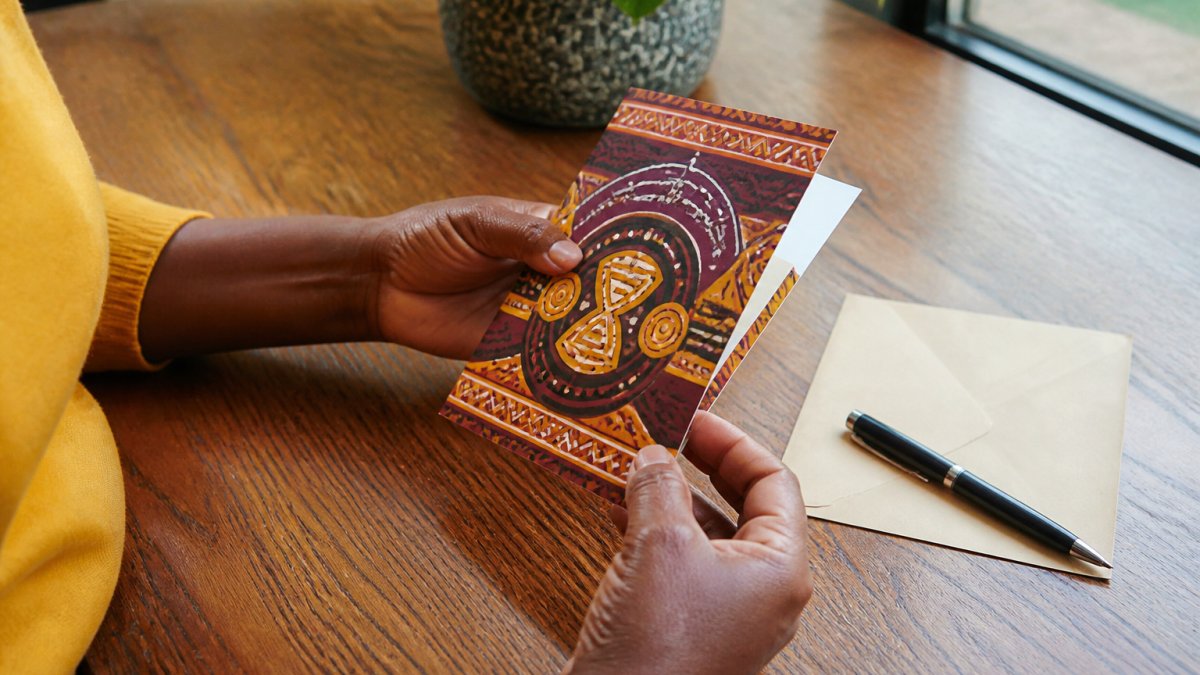
Authentic representation means the imagery, language, and creative voice come from inside the culture. It shows real moments, real textures, real family dynamics. It doesn't reduce Blackness to a color palette.
Representation That Goes Beyond Color
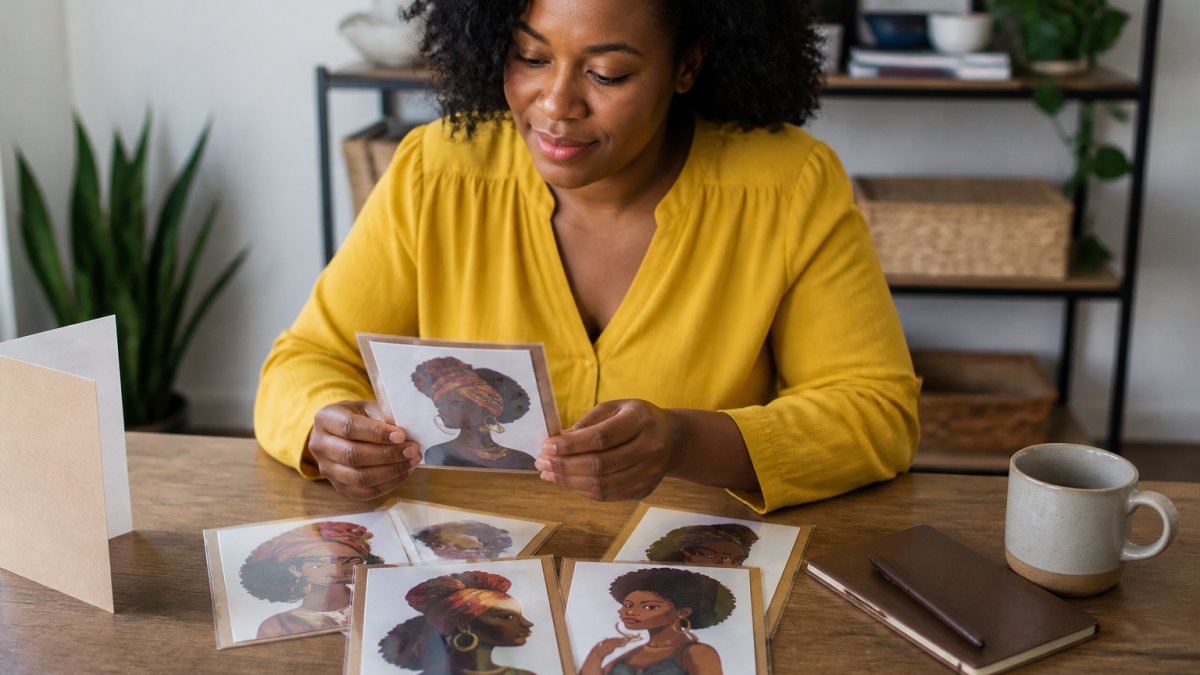
A card that simply swaps skin tone on a generic design misses the point. Look for details that signal lived experience: hair textures rendered with care, interiors that feel like somebody's actual living room, garments and keepsakes with cultural weight. Black Art Depot's greeting card collection describes cards featuring artwork by established and emerging ethnic artists, which is the standard to hold any card to. If you want to see what that looks like in practice, our Black Love family keepsake card pairs jewel-toned imagery of roses, candlelight, and cultural keepsakes with a message built for siblings and loved ones.
Red Flags in Card Imagery and Language
Watch out: exaggerated dialect, stereotyped clothing or hairstyles, and "ethnic" fonts are the clearest warning signs. Penn State University Libraries' archival collection notes documents historical cards that depicted Black people through stereotyped and exaggerated clothing and hairstyles, and those visual habits still surface in cheap designs today. If a card's Blackness reads as costume rather than culture, put it back.
Shopping for African American Greeting Cards by Occasion
Occasion drives everything. A graduation card needs momentum; a sympathy card needs restraint. Matching the card to the moment matters more than matching it to a trend. What most retail category pages do not give you is a way to compare options across occasions in one place, so use the breakdown below as a cross-occasion map: what each occasion demands, what authentic representation looks like in that context, and what to skip.
Birthday Cards
Birthday cards are the highest-volume occasion and the easiest place for generic designs to hide. Authentic birthday cards tend to reference something specific: a family cookout, a grandmother's kitchen, a church anniversary, a particular style of humor that sounds like the sender. Hallmark's Mahogany line describes itself as a collection of African American cards for occasions including Christmas and birthdays, alongside gifts and decor inspired by Black culture, per Hallmark's Mahogany collection overview.
Graduation and Congratulations Cards
Graduation cards should name the achievement and the effort behind it. A strong card references the specific milestone (high school, college, trade program, advanced degree) and the family or community that supported the graduate. Congratulations cards for a new job, a new home, or a business launch work the same way: specific to the win, not copy-paste sentiment.
Thank-You Cards
Gratitude cards are where authenticity shows fastest, because the message has to sound like a real person talking. The test for any thank-you card: could you imagine saying the printed message out loud to the recipient without feeling like a stranger wrote it?
Inspirational and Motivational Cards
Encouragement cards carry the most weight of any category, because people send them when someone is grieving, recovering, or simply worn down. Words of encouragement should be steady and honest, not relentlessly upbeat. Our Covered and Kept comforting card was designed for exactly this: a cozy still-life of soft knit, tea, and candlelight that brings calm and reassurance to someone in a hard season.
Christmas and Holiday Cards
Holiday cards sell in volume, which means generic designs flood the shelf. Check whether the holiday imagery includes Black family traditions, such as a specific holiday table, church service, or family gathering, or just recolors a standard snowman scene. A useful rule: if the only thing Black about the card is the skin tone, it is a holiday card, not a Black culture holiday card.
Friendship and Family Cards
Friendship and family cards are where tone matters most. For a friendship or thinking-of-you moment, our Friendship Greeting Card offers a soft, cozy scene that reads like a quiet check-in. For family relationships, match the card to the relationship: sibling humor, parent gratitude, grandparent honor. A card that references a shared family memory lands harder than one that references nothing at all.
Sympathy and Hard-Season Cards
Sympathy cards need restraint. Short, sincere, and specific beats long and poetic. If you are unsure what to write, name what you are praying for, skip the advice, and keep it under a few sentences. The same card stock and print quality that make a birthday card feel like a keepsake matter even more here, because sympathy cards are often kept.
How to Compare Cards Across Occasions
Use these four checks on any product page, regardless of occasion:
- Occasion fit: Does the card name the moment specifically, or could it be sent for anything?
- Tone fit: Funny, sweet, or heartfelt, matched to the relationship, not to the trend.
- Cultural specificity: Real details (food, faith, family, texture, language) rather than surface decoration.
A card that passes all four is worth the price. A card that passes only the first two is a generic card with a new cover.
Black Birthday Cards and Graduation Wishes That Fit the Person
The best birthday card sounds like the sender, not the greeting card company. That means matching tone first: funny messages for the friend who roasts you, sweet messages for a parent, heartfelt messages for a milestone.
Here's a quick way to sort it:
| Occasion | Tone to aim for | What to avoid |
|---|---|---|
| Birthday (close friend) | Funny, insider, playful | Generic "another year older" lines |
| Birthday ( elder family member) | Warm, grateful, specific | Jokes about age |
| Graduation | Proud, forward-looking | Vague "follow your dreams" filler |
| Congratulations | Specific to the win | Copy-paste sentiment |
Cultural specificity helps here too. A card that references family cookouts, church anniversaries, or a grandmother's kitchen lands harder than one that references nothing at all.
African American Inspirational Cards for Hard Seasons
Encouragement cards carry the most weight of any category, because people send them when someone is grieving, recovering, or simply worn down. Words of encouragement should be steady and honest, not relentlessly upbeat.
Our Covered and Kept comforting card was designed for exactly this: a cozy still-life of soft knit, tea, and candlelight that brings calm and reassurance to someone in a hard season.
Why Black-Owned Greeting Card Businesses Matter
Money moves representation. EBONY's roundup of Black-owned card brands highlights labels like Black Paper Party, Culture Greetings, D. Johnson & Co. Greetings, and Hella Black as a distinct shopping category, and every purchase from a Black-owned greeting card business keeps that category growing. It also keeps creative control where the culture lives. But "Black-owned" is a starting point, not a finish line.
Artist and Creator Context
Ask who made the art. Cards built on original work by Black artists carry a different weight than licensed stock imagery, and the difference is visible in the details: line quality, how hair and hands are rendered, whether the interior feels like a real home or a set. Junebug Ink's history of the greeting card industry notes that as the commercial industry grew through the early and mid-20th century, it largely excluded authentic representations of Black life, which is exactly the gap independent creators now fill.
A practical way to evaluate creator context:
- Look for a named artist. Product pages that credit the illustrator or designer signal original work; pages that credit no one often rely on stock or licensed art.
- Check the brand's about page. A short founder story with a real name and location is a better signal than a generic mission statement.
- Read the message voice. Cards written by people inside the culture tend to use specific references (a particular dish, church tradition, or family saying) rather than broad "Black excellence" language.
Materials, Printing, and Sustainability
Card stock weight, print quality, and envelope construction decide whether a card feels like a keepsake or a throwaway. Look for:
- Sturdy matte or uncoated stock that takes pen ink without smearing, since most people sign by hand.
- Clean color reproduction, especially in deep jewel tones and skin tones, which are the first places cheap printing shows banding or muddiness.
- Envelope construction, including a gummed or peel-and-seal flap and a size that fits the card without forcing.
A card someone pins to a fridge for a year should survive the year.
What to Write Inside Your Card
The message is where most people freeze. Use this framework and you'll never stare at a blank card again:
- Open with their name and one specific memory or detail
- Name the occasion in plain words
- Add one sentence of what you appreciate about them
Here's a fill-in template for a thank-you card:
"[Name], I keep thinking about [specific moment]. Thank you for [what they did], it mattered more than you know. I'm grateful for [quality you admire] in you. With love, [your name]"
Keep it under 60 words. Specific beats poetic every time.
Shop the GuidingLightExpress Collection
Choosing well comes down to a few checks: authentic imagery, language that fits the person, and a creator whose work you trust. We built GuidingLightExpress around a third check that most card companies skip.
Pricing depends on the card and quantity, so check current prices on each product page. When you're ready, browse the full GuidingLightExpress collection and find the card that fits the moment.
Frequently Asked Questions
Where can I buy authentic Black culture greeting cards?
Start with Black-owned greeting card businesses, which are more likely to hire Black artists and design from lived experience. Retail collections such as Hallmark's Mahogany line also carry African American cards for birthdays, Christmas, and other occasions, and Black Art Depot sells cards and box sets featuring artwork by established and emerging ethnic artists. Compare the artist credit, the message writing, and the materials before you buy. GuidingLightExpress also offers culturally rich designs, and every purchase supports mental health services for uninsured residents in Central Georgia.
How can I tell whether a greeting card authentically represents Black culture?
Look at who made it. Cards that credit a named Black artist or illustrator, use accurate skin tones and hairstyles, and write messages in natural voice tend to hold up better than generic designs. Penn State's archival collection shows how early commercial cards relied on stereotyped and exaggerated clothing and hairstyles, so imagery alone is not proof of respect. Read the wording too: authentic African American inspirational cards speak to real experiences rather than catchphrases, and the design should feel like it belongs to the person receiving it.
Are there Black-owned greeting card businesses I can support?
Yes. Editorial roundups have highlighted brands such as Black Paper Party, Culture Greetings, D. Johnson & Co. Greetings, and Hella Black, and many of these businesses design around specific occasions and cultural moments. Buying from Black-owned greeting card businesses keeps more of the spend inside the community that inspires the designs. Check whether the company names its artists, publishes its production standards, and explains where proceeds go. Purpose-driven brands like GuidingLightExpress pair culturally rich cards with a stated community benefit, which gives your purchase a second layer of meaning.
What should I write in an African American greeting card?
Write to the specific person, not the category. Name something true about them, then add one line of encouragement or gratitude. For Black birthday cards, a memory or a compliment about their character lands better than a generic wish. For African American inspirational cards sent during a hard season, keep it short and steady: acknowledge what they are facing, then say you are with them. Sign it by hand. A heartfelt message in a well-made card does more than a long note in a card that feels impersonal.
Most greeting cards are forgotten within a week. A card that reflects the person receiving it, written in your own words, tends to stay. GuidingLightExpress makes that easier with culturally rich greeting card designs, faith-filled apparel and gifts, and a mission that sends part of every purchase to community mental health support. Get started with GuidingLightExpress and send something that carries real weight.